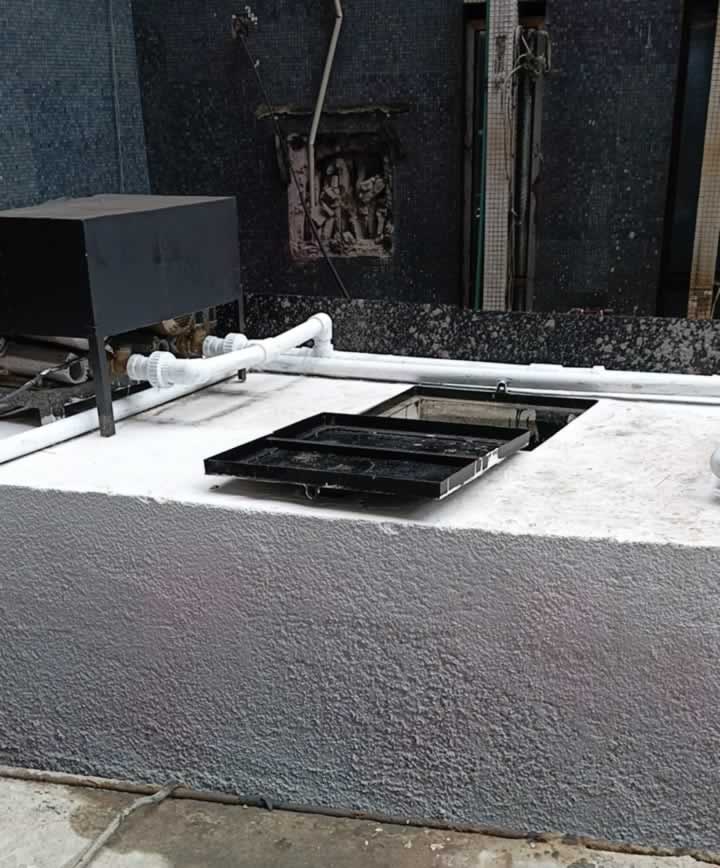
CONSTRUCTION AND SERVICING OF SEWAGE TREATMENT PLANT
The construction and servicing of a Sewage Treatment Plant (STP) involves a systematic approach to safely break down organic waste through physical, biological, and chemical processes. This ensures that the treated wastewater is safe for the environment or reuse
Key Phases of STP Construction
- Site Assessment & Planning
: An engineer evaluates the property to test soil percolation, calculate the daily wastewater volume, and ensure regulatory compliance.
- Excavation & Siting
: A hole is excavated with adequate clearance around the tank. The tank is lowered, leveled to ensure proper flow, and secured with a concrete base and backfill.
- Plumbing & Electrical Connection
: The house's discharge lines are connected to the tank's inlet, and the effluent outlet is linked to a soakaway or drainage field. Electrical connections are run to power mechanical components like air blowers.
- Commissioning
: The system is filled with water for stabilization and tested for density, weld integrity, and mechanical function before official startup.
Essential Servicing & Maintenance
Routine maintenance ensures the biological processes (microorganisms breaking down waste) operate at peak efficiency.
- Routine Inspections
: Systems should be checked annually (or more frequently for high-volume use) to ensure the air blower, diffusers, and high-level alarms are functioning properly.
- Desludging (Emptying)
: Sludge must be pumped out and disposed of every 6 to 24 months, depending on the manufacturer's guidelines and plant size, to prevent solids from building up and contaminating the discharged water.
- Component Servicing
: Our trained engineers will check electrical controls, clean or replace blower filters, clear debris from stilling zones, and ensure the discharged effluent meets local environmental standards.